What is the fear of having an empty beer glass called?
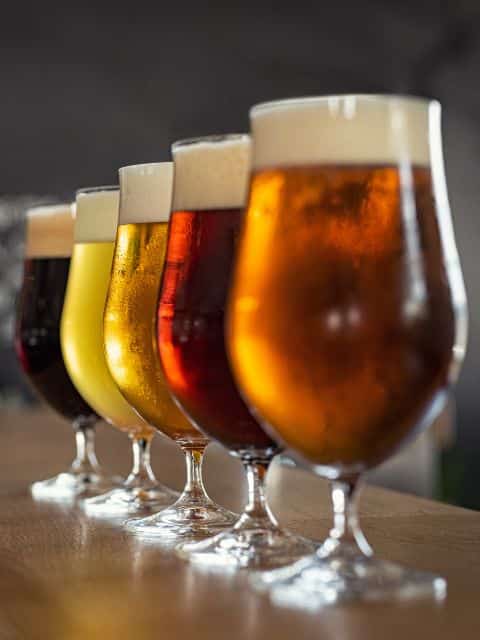
Anxiety when your drink is below 25% full. - Frantic waving at bartenders. - "Preemptive ordering" (getting a new beer before finishing the current one). This is a playful, pseudo-clinical term—not an officially recognized phobia in medical literature!
Beer is the 3rd most popular beverage on EARTH.
Global Beverage Rankings (By Volume Consumed)
- Water (Essential, obviously)
- Tea (~2 billion daily drinkers, especially in Asia/Africa)
- Beer (~1.8 billion hectoliters/year, per statista.com.
- Coffee (~400 billion cups/year)
- Soft Drinks (Coca-Cola alone sells ~200 billion servings/year)
What is beer called before it is fermented?
What Beer Is Called Before Fermentation
Wort (pronounced "wɜːrt")
The unfermented liquid extracted from malted grains during brewing is called wort.
Key Characteristics of Wort:
- Sweet: Contains sugars (maltose, maltotriose) from mashed grains
- Bitter: Includes hop compounds added during boiling
- Unfermented: 0% alcohol until yeast is added
- Color: Ranges from pale gold (for lagers) to dark brown (for stouts)
How many 12 ounce beers are in a standard full-size keg?
Common U.S. Keg Sizes & Beer Counts:
Half Barrel Keg (Standard Full-Size Keg)
Volume: 15.5 gallons
12 oz beers: ~165
16 oz pints: ~124
Quarter Barrel Keg (Pony Keg)
Volume: 7.75 gallons
12 oz beers: ~82
16 oz pints: ~62
Sixth Barrel Keg (Sixtel)
Volume: 5.16 gallons
12 oz beers: ~55
16 oz pints: ~41
Corny Keg (Homebrew Keg, 5-gallon)
Volume: 5 gallons
12 oz beers: ~53
16 oz pints: ~40
Mini Keg (European Style, 5-liter)
Volume: 1.32 gallons
12 oz beers: ~14
How much alcohol does the strongest beer in the world have?
The Strongest Beers in the World (2024)
1. Snake Venom (Brewmeister, Scotland)
- ABV: 67.5%
- Type: Ice-distilled barleywine
- Key Fact: Uses freeze distillation (like eisbock) to achieve extreme strength. Priced at ~$80 per bottle.
Other Notable High-ABV Beers:
| Beer | Brewery | ABV |
|---|---|---|
| Armageddon | Brewmeister (UK) | 65% |
| End of History | BrewDog (UK) | 55% |
| Koelschip Start the Future | Brouwerij 't Koelschip (NL) | 60% |
Important Notes:
- These beers are not traditional—they’re brewed like spirits (multiple distillations).
- Many are sold in small bottles (≤12 oz) due to extreme alcohol content.
- Some countries ban ultra-high-ABV beers as "distilled spirits."
Fun Fact: The strongest non-distilled beer is "The Bruery’s Black Tuesday" (19.5% ABV).
Advertisement
What does IPA mean?
What Is IPA Beer?
IPA (India Pale Ale) is a hoppy, bitter beer style within the broader pale ale category, known for its bold flavors and higher alcohol content (typically 5–7% ABV).
Key Characteristics:
- Flavor: Dominated by hoppy bitterness, with notes of citrus, pine, floral, or tropical fruit.
- Color: Ranges from golden to amber.
- ABV: Usually 5–7% (double/imperial IPAs can exceed 8%).
- Bitterness (IBU): 40–100+ (measured on the International Bitterness Units scale).
Types of IPA:
| Type | Description |
|---|---|
| West Coast IPA | Classic pine/citrus bitterness, dry finish. |
| New England IPA (NEIPA) | Juicy, hazy, low bitterness, tropical fruit flavors. |
| Double/Imperial IPA | Higher ABV (8–10%), intense hop flavor. |
| Session IPA | Lighter (4–5% ABV), easy-drinking. |
History:
IPAs originated in 18th-century England, where extra hops and higher alcohol were used to preserve beer during long sea voyages to India (hence the name). Modern IPAs evolved in the U.S., emphasizing hop aroma and flavor.
The foam at the top of the beer is refer to as what?
A proper head is a sign of good pouring technique and fresh beer!
What is the number one best selling beer on earth in 2024?
The World's #1 Best-Selling Beer (2024)
Snow Beer
Brewery: CR Snow (Joint venture: China Resources & SABMiller)
Annual Sales: ~100 million hectoliters (2.8 billion gallons)
Market Share: 5.4% of global beer consumption
Why Snow Dominates:
- China's Scale: Accounts for 90% of sales in the world's largest beer market
- Affordability: Sells for ~$0.50 USD per 330ml bottle locally
- Light Profile: 3.3% ABV pale lager tailored to Asian tastes
Other Top-Selling Global Brands:
| Brand | Parent Company | Global Rank |
|---|---|---|
| Tsingtao | China | #2 |
| Bud Light | AB InBev (Belgium) | #3 |
| Heineken | Netherlands | #4 |
Did You Know? While Snow is #1 by volume, Corona Extra is the top-selling beer by revenue ($7.3 billion annually).
Source: Statista 2023, Kirin Holdings Beer Report
Although there are hundreds of styles of beer - there are 2 basic categories of beer - ales and lagers.
The Two Basic Categories of Beer
True! All beer styles ultimately fall into two fundamental categories:
1. Ales
- Yeast: Top-fermenting (Saccharomyces cerevisiae)
- Temperature: Warmer (15–24°C / 59–75°F)
- Flavor Profile: Fruitier, spicier, and more complex
- Examples: IPA, Stout, Wheat Beer, Belgian Tripel, Porter
2. Lagers
- Yeast: Bottom-fermenting (Saccharomyces pastorianus)
- Temperature: Cooler (7–13°C / 45–55°F)
- Flavor Profile: Crisper, cleaner, and smoother
- Examples: Pilsner, Helles, Bock, Budweiser, Corona
The Key Difference
Yeast type and fermentation temperature define the split between ales and lagers.
Fun Fact
The word "lager" comes from the German lagern ("to store") - these beers were historically aged in cold caves!
Note: While hybrid styles (e.g., Kölsch, Altbier) exist, all beers trace back to these two families.
Does beer go bad? Unopened (Pasteurized) Beers like Miller Light, Coors etc.
Signs Beer Has Gone Bad:
- Off flavors/smells: Skunky (light-struck), sour, metallic, or cardboard-like (oxidized).
- Flat carbonation: Stale beer loses fizz.
- Cloudiness (in normally clear beers).
- Floating chunks (in unfiltered beers, this may be normal—check the style).
How Long Does Beer Last?
| Storage Method | Typical Shelf Life |
|---|---|
| Unopened (Pasteurized) | 6–9 months (check "best by" date). |
| Unopened (Craft/Cellarable) | 1+ years (high-ABV, dark, or sour beers age well). |
| Opened | 1–2 days (flat/carbonation loss). |
| Draft/Keg (Opened) | 2–3 months (if CO2-sealed), 1–2 days (after tapping). |
What Makes Beer Go Bad?
Light Exposure (Skunking)
UV light breaks down hops, creating a sulfur-like smell.
Fix: Buy brown bottles or cans; store in the dark.
Oxygen (Oxidation)
Causes cardboard/wet paper flavors.
Fix: Seal caps tightly; drink fresh beers quickly.
Heat
Speeds up spoilage; ideal storage is cool (50–55°F).
Fix: Avoid warm places (e.g., garages).
Bacteria/Wild Yeast
Rare in commercial beer (pasteurization kills microbes).
Risk: Unpasteurized/homemade beer may sour over time.
Exceptions (Beers That Age Well)
- High-ABV beers (e.g., barleywines, imperial stouts).
- Sour/wild ales (intentional bacteria/yeast).
- Bottle-conditioned beers (live yeast extends life).
Advertisement
What country consumes the most beer per capita?
Countries That Drink the Most Beer Per Capita (2024)
Czech Republic
Annual Consumption: 184 liters per person (48.6 gallons)
Key Fact: Holds the #1 spot for 29 consecutive years. Pilsner beer was invented here in 1842.
| Rank | Country | Liters Per Capita | Notable Beer |
|---|---|---|---|
| 1 | Czech Republic | 184 | Pilsner Urquell |
| 2 | Austria | 108 | Stiegl |
| 3 | Germany | 99 | Weihenstephaner |
| 4 | Poland | 97 | Żywiec |
| 5 | Romania | 95 | Ursus |
Did You Know?
- The Czechs drink more beer than water (135L water vs 184L beer annually).
- Germany may be famous for beer, but ranks 3rd in consumption.
- USA ranks ~20th (74L), while China is the largest total consumer (by volume).
Source: Kirin Beer Report 2023, WHO data
The study of beer and beer brewing is called
The scientific study of fermentation processes in brewing is called zymurgy, derived from the Greek zymē (fermentation) + -ourgia (working).